An Irish guitarist/singer/songwriter who was one of Ireland’s greatest gifts to music, Rory Gallagher connected across the globe with fans who were irresistibly drawn to his everyman persona and ability to turn a guitar into a lethal weapon.
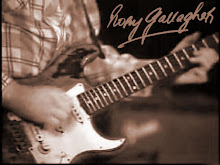
Often clad simply in a flannel shirt and jeans and playing his trademark battered Fender Stratocaster, Gallagher was the workingman’s musician.
Eschewing ego and pomp for the opportunity to polish his craft and play his heart out for an audience, he lived for music and the guitar. Be it blues, rock or folk — acoustic, electric or slide — Gallagher delivered the goods. Just put a guitar in his hands and step aside. No, really.
Off-stage, Gallagher was a soft-spoken, polite individual known for his willingness to talk music and teach a budding guitarist how to play a riff. In an industry fueled almost entirely by self-promotion and decadence, Gallagher’s humility was a proverbial breath of fresh air.
But get him on stage and watch out! His live shows were legendary — rousing affairs — combining the rock ’n’ roll heart of Chuck Berry and the blues soul of Muddy Waters with the near maniacal energy of Bruce Springsteen. Gallagher was at his best playing live, and he perfected his craft by touring, always touring.
Longtime Gallagher bassist Gerry McAvoy estimated touring America alone 28 times (!) during his stint with Rory. And Gallagher always seemed genuinely eager to please the crowd, often saying something like,
“Here’s a song you might like.”
Rory was beloved everywhere, but he was practically royalty in his home country of Ireland, where he became the Emerald Isle’s de facto ambassador of the blues.
A prolific writer and recorder, Gallagher released more than a dozen albums between 1971 and 1991, at times releasing a new album every year. His energetic blend of the blues with rock ’n’ roll attracted the attention of some of the most talented of his contemporaries: Count Bob Dylan, Brian May and Van Morrison among Rory’s admirers.
Unfortunately, Gallagher’s life was cut short. On June 14, 1995, he died following complications from a liver transplant. He was 47. His brother Donal Gallagher knew him best and has special insight on the man who would be the king of British Isle blues.
The Early Years
Rory Gallagher was born in Ballyshannon, Donegal, Ireland, March 2, 1948. He was exposed to music early on.
His father was a musician and his mother was a very good singer. Beyond his family’s musical influences, Gallagher was a keen radio listener and very adept at surfing the radio and picking up stations including Voice of America and Radio Luxembourg. Through the airwaves, Gallagher received a well-rounded music education, locking on to a collage of artists including Elvis Presley, Buddy Holly, Big Bill Broonzy, Ramblin’ Jack Elliot, Lonnie Donegan, Eric Dolphy and Ornette Coleman.
Particularly, the music of Buddy Holly, Chuck Berry and Muddy Waters would greatly influence the rock and blues sides of his guitar playing. In addition, traditional Irish music always loomed in the background.
When the Gallaghers moved south to Cork, Ireland, Rory picked up his first guitar at the age of 9 — a wooden acoustic model that, according to his brother Donal, dwarfed the youngster. Rory taught himself to play and was soon performing local events in Cork.
Rory and Donal formed their own skiffle band as youngsters, after falling under the spell of the genre’s star Lonnie Donegan. The skiffle master was largely responsible for popularizing the guitar in Britain at the time. In fact, the two acoustic guitars that filled music shops at the time were the Donnegan and Elvis Presley models.
In 1961, Gallagher formed his first band. Two years later, he purchased the used 1961 Fender Stratocaster that would rarely leave his side until his death nearly 35 years later.
Gallagher was entranced by Buddy Holly — the lanky Texan also played a Stratocaster — and Rory wanted to play the same instrument as the American star.
He told fellow Irishman and guitar slinger Vivian Campbell about his earliest influences and first instruments:
“As an absolute youngster, I liked the guitar-cowboy pictures: Roy Rogers, Gene Autry. But then I heard Elvis Presley, Lonnie Donegan and Chuck Berry — almost all at the same time on the radio — and was I keen to get an acoustic. The songs Lonnie Donegan was singing were Woody Guthrie songs and Leadbelly songs, so it was like a backdoor into blues stuff. At the same time, I liked what Eddie Cochran played on the guitar. I didn’t even have a record player then. I just listened to Radio Luxembourg, AFN and BBC jazz programs, because in those days they wouldn’t play a blues record on a pop program. But, you can imagine in Ireland at the time, just any American guitarist freaked me out, regardless of who it was. There was no guitar player in Cork, where I came from. I had seen a friend of my father’s who was a guitar player, and he left the guitar in the house one night, and I just sat there looking at it. I was afraid to touch it. I was just fascinated by it. I started playing electric guitar when I was around 12.”Donal recalled the Strat.
“Seeing that guitar in the window [of the music store] — I remember Rory coming back one night — it suddenly appeared in the window. It would have probably been one of the first Stratocaster’s imported into Ireland. It had been acquired by one of the guitarists in the Showband. The guy didn’t like the color — he wanted a red one like Hank Marvin [had], and it took three months to ship from the States at that time… It came back to the store as a second-hand instrument. And I remember Rory telling me, “You’ve got to come down to the store. Buddy Holly’s guitar is in the window!... Buddy Holly was a massive, massive influence on Rory’s guitar style.”The Stratocaster had seen some use but nothing like the workout it would get under Gallagher’s hands in the years to come.
In a 1990 Q magazine interview, Gallagher recalled purchasing the axe:
“It’s a 1961 model. I got it secondhand. It was 100 pounds, which was an absolute fortune at the time. It was in good condition then, but it’s got so battered now it’s got a kind of tattoo quality about it. There’s now a theory that the less paint or varnish on a guitar — acoustic or electric — the better. The wood breathes more. But, it’s all psychological. I just like the sound of it. It’s also a good-luck thing. It was stolen one time, and it came back. It’s kind of a lucky charm.”Gallagher played in several bands in Cork before forming the Fontana Showband, an outfit that, like so many of the “Show Bands” of the day, would serve as entertainment for the many rural Irish dance halls. Rory and his Fontana mates would often play for five to six hours per gig to satisfy the music-hungry patrons, many who would travel for miles from their rural homes.
Playing such extended hours and covering a wide variety of music — country, traditional Irish music, current pop hits — was akin to athletic training for the musicians. Those rigorous Showband gigs honed Gallagher’s playing and stage skills, and turned him into a performing machine.
Donal says,
“Rory didn’t want to go down that route, and at the age of 15, he got his first electric [guitar]. He had got a small amp and was progressing so quickly that it [playing in a showband] didn’t satisfy him. He wanted to upgrade his guitar and patch through an amp to really get some volume… He tried to find some like-minded souls to play with.
“Skiffle had kind of gone full circle. Rock music — the likes of Chuck Berry had emerged, as had guitar bands like The Shadows and The Ventures. There was a lot more guitar-oriented music. It had started to filter through with films like ‘Jailhouse Rock.’ Rory decided he would take a position with the Showband very much to turn his amp up, and play and entertain.”
Although Gallagher was playing regularly, he was frustrated by the constraints of the showband — playing the hits of the day for the crowds — and wanted to concentrate more on blues and rock ‘n’ roll. Rory was just a babe at 15, playing with musicians in their 20s and even 30s.
“He made himself look older,” said Donal,
“to get the audition, and he had to become a member of the union.”The Showband did allow Rory to play some of the Buddy Holly numbers he loved so much, along with Elvis Presley songs and a smattering of other rock tunes, but his musical talent was becoming more and more apparent.
“He had an aptitude for music, so he was also teaching the other members of the band,” said Donal.
The Fontana eventually got a residency at a U.S. Air Force Base in Spain, just outside Madrid. Rory was 17 at the time and anxious to play in front of an American audience to see how he measured up. By all accounts, he was up to the task.
The Showband evolved into
Impact, which found Gallagher and bandmates playing regular gigs in Hamburg, Germany. The Impact even opened for
The Byrds, who were touring in support of
Mr. Tambourine Man.
Taste
In 1967, Gallagher formed
Taste, along with bassist Eric Kitteringham and drummer Norman Damery. The blues power trio developed a strong following in Ireland and Germany and enjoyed a regular venue at Belfast’s Maritime Club.
A year later, Kitteringham and Damery were replaced with bassist Charlie McCracken and ex-Them drummer John Wilson. With McCracken and Wilson, Gallagher and Taste recorded two albums, the self-titled debut and
On The Boards, which made it into the U.K. Top 20 Album charts. The band amassed a steady following with their blues-rock approach, gathering enough steam to support the power trio of the day,
Cream, on its 1968 farewell show.
After Eric Clapton left Cream, Jack Bruce and Ginger Baker searched for a new guitarist and wanted Rory to try out with them to possibly form a new power trio.
“But Rory didn’t want to go down the route of replacing somebody in the band,” according to Donal.
“There was, though, the possibility of Cream with Rory at that time.”Taste later toured with Clapton’s newest band,
Blind Faith, as well, for six weeks, at which time stresses within the trio started to show. It would be soon after Taste’s 1970 Isle of Wight performance that the band decided to call it a day. Management problems and lack of a unifying musical direction splintered the group, and after a New Year’s Eve gig in Belfast, Taste was no more.
“At that point, Taste had become a huge band, particularly in Europe,” Donal said.
“But they were still playing through the P.A. system Rory had inherited from the Showband and still living in one-bedroom bedsits. I think he was on salary of $20 a week… There was a whole tour booked out to support the On The Boards album, and Rory was walking away from it.”Gallagher told Goldmine’s Richard Skelly in 1991,
“Taste split up in 1971. The band split for all kinds of reasons. The drummer wanted to play jazz, the manager had difficulties with us, or I had difficulties with him, so it was six months of legal hassles with all kinds of strings attached to be able to get out and work again. Anyway, I went off with my own band in 1971, and recorded the first album under my own name and started touring through Europe. Luckily, I still had some of the old Taste fans and some new fans, and it developed.”Gallagher Solo
Gallagher wasted little time after Taste disbanded, recruiting ex-
Deep Joy bassist Gerry McAvoy and ex-
Method drummer Wilgar Campbell to support his solo efforts. McAvoy’s hard-driving bass work proved a perfect match for Gallagher’s high-energy efforts and he would remain Rory’s bassist for more than 20 years, while. Campbell was an accomplished drummer.
In May 1971, Gallagher released his self-titled debut album. The record is an excellent chronicle of the 22-year-old musician’s ability to weave rock, blues and jazz into his own vision. Tracks such as “Laundromat” and “Sinner Boy” are full of the fiery rock energy that typify his live shows. Others, such as “Hand’s Up,” reveal Gallagher’s love of jazz.
The debut also features Rory playing saxophone on a couple of numbers, an instrument that he seemed to take to naturally.
“Rory had a huge fondness for jazz,” said Donal,
“and was well versed in it, but with the excitement of rock ‘n’ roll, he had kind of drifted away from it. But, he was very much into people like Ornette Coleman... and certainly Eric Dolphy. "“On one of the first Taste gigs, they supported Captain Beefheart up in a club in London… I remember he was so impressed with Captain Beefheart. He spent hours talking to Captain Beefheart, who encouraged him to be more experimental and stretch the thing and play as many bum notes as you can [laughs]. Also, a lot of the [music] festivals were still jazz festivals… He really liked listening to the instrument, and then suddenly, we’re riding back one day… and [he] produced an alto sax. And he started practicing, and I think it took him two weeks to get on top of the instrument. He would rehearse in a closet where our clothes were in, and he’d play into that to sort of dampen the sound [laughs]. And the next thing, he was recording with it. He really had an incredible ability.”Late in 1971, Gallagher released his second solo album,
Deuce. This sophomore set of blues-rock numbers features the clean, wiry production of the debut and another strong set of jagged blues-rock numbers. It didn’t necessarily break new ground (it was in fact his second album in the same year), but it chronicles Rory coming into his own as a songwriter and his guitar playing was only getting better. It also hints at what was yet to come. The kid from Donegal wasn’t ready to lay down for anyone. Just wait ‘til next year!
1972 was a watershed year for Gallagher. He released his first live recording,
Live In Europe, an album that went Gold and captured the magic and intensity of Gallagher’s live shows. For those who hadn’t seen Rory play live, listening to him tear through songs such as “Bullfrog Blues” must have been revelatory.
“You also had at that point in time, the start of the whole glam and glitter brigade,” said Donal,
“and the whole pop star thing… record companies were looking at ways to commercialize the elements — the face paint, the glam and the glitter, what Rory would have seen as the whole show band element, crept in. But Rory was kicking ass against all that. It was straight, no-nonsense blues-rock ’n’ roll. And that album [Live In Europe] still stands up well; in fact, it’s been re-produced on vinyl again by Sony BMG… Just going back in to remaster that — the vibrancy of it — “I Could’ve Had Religion:” [Bob] Dylan was quite a fan of that track.”The success of
Live In Europe was just a piece of the popularity that Gallagher was enjoying. He was also being regularly featured on BBC Radio shows and was broadcast to distant locales including Hong Kong and Canada. That same year, he was selected to record with his idol Muddy Waters on the bluesman’s The London Muddy Waters Sessions and was named Melody Maker’s Top Guitar Player.
His sound would also undergo a transformation as drummer Campbell left and two new members entered the Gallagher camp: ex-
Killing Floor’s Rod De’Ath (drums) and keyboardist Lou Martin. The outfit of McAvoy, Martin and De’Ath would figure heavily on some of Rory’s strongest work and greatest live performances during the early and mid-’70s.
It was this lineup that anchored keystone albums such as
Blueprint and
Tattoo, a pair that are arguably the best of the guitar slinger‘s catalog. It’s here that Gallagher’s guitar playing and songwriting meet head on, reaching new heights on tunes such as “Daughter Of The Everglades,” the charging “Cradle Rock,” the jazz-flavored “They Don’t Make Them Like You Anymore” and “A Million Miles Away,” a melancholic reflection of life on the road that became Rory’s signature tune.
Tattoo is a highly personal and reflective album buoyed by incredible guitar playing and interplay between Gallagher and bandmates and is probably the place to start for those wanting an introduction to his music.
“The keyboards certainly added a new dimension,” said Donal of the lineup at the time.
“Initially, Rory’s desire was really trying to experiment with having a rhythm guitarist, who could double up. In fact, when he took Lou on — I remember the first couple of gigs in Italy — Rory strapped a guitar on him to have a bit of rhythm. But Lou really wasn’t competent enough; he could play rhythm, but to back Rory would be difficult. So, he stuck mainly with the keyboards, and it opened up quite well. And Rod’s drumming was quite different than Wilgar’s. Wilgar had left the band — he found it very hard to cope with flying and had a lot of issues going on, so he stood down. Rod came straight in and really was a straight, no-nonsense rock drummer. Basically, he was ambidextrous and had that kind of flair to cover the kit… Rod used such heavy sticks as well, and for such a thin, wiry guy, he got more volume than anybody I know… It allowed Rory, probably, to be a bit more experimental in his songwriting. The jazz flavors in the rhythms just came out and flourished quite well on Blueprint and Tattoo — tracks like ‘They Don’t Make Them Like You Anymore,’ for instance — the jazz phrasings and piano and guitar complementing one another.”Although the quartet was laying down some incredible studio tracks, the band would truly cement its status in live performances. By the mid-70s, Gallagher’s band was a live juggernaut. The constant touring had honed the quartet into an outfit of staggering stamina and power.
“The energy was difficult to keep up with. The pace Rory was setting was quite extreme. Blind faith and self confidence were certainly attributes. But, though the pace was a normal and even comfortable one to Rory, to the new members of the band it was a challenge.
Mentally, all was in synch. But physical endurance was constantly being challenged” — pianist Lou Martin, on playing live with Rory Gallagher (from the book “Gallagher, Derringer & Tower”).
The time was right was to get it all on tape. And get it all they did with Irish Tour.
1974’s live
Irish Tour is simply one of the greatest live albums of all time, an incredible document capturing a band that few (if any) others could match once the lights went down. Recorded at Belfast’s Ulster Hall at a time when few artists dared play in Northern Ireland, Gallagher instead was a unifier of fans during this violent and inauspicious time in the country‘s history. Not only recorded for audio, the tour was also filmed by Tony Palmer and released in the U.K. as a full-scale film, a precursor of sorts to the music-video craze that would follow years later.
What made the album so special?
“I think before that, Rory recognized that that lineup had clicked, particularly after the Tattoo album,” said Donal. “They were touring, and [the band] was a well-oiled machine. And they were playing night after night, so the band was firing on all cylinders. So, at that point, they were doing an Irish tour, and I remember saying to Rory that taking a crew to Northern Ireland wasn’t the safest thing to do right now. I remember him saying that he didn’t know if he would ever reach a point like this again with a band — there would obviously be different peaks with different musicians — but he thought this lineup was peaking right then.”Peaking it was.
Irish Tour is a selection of tunes cherry-picked from numerous dates within the country. The album is one highlight after another. We‘re treated to a blistering version of “Cradle Rock” and the slow burn of “A Million Miles Away,” with some of Martin’s finest keys work. The entire set moves with the energy of a herd of wildebeests crossing the Serengeti.
“Rory was flat out… I used to marvel at him. He was like an athlete. ‘How can you play guitar and remember all those lyrics?’ Plus, the hidden talent of being a great bandleader. He wouldn’t even tell musicians what the next number was. They’d get a clue by the little riff, and they’d just have to get in once he started — particularly the drummers, I think it took its toll. You just didn’t know how long any number might be. The sweat on those guys [the band members from playing]. I remember spending all night in the bars just to recover [laughs]. And some nights there’d be three or four encores.“I remember a promoter in California… he said, ‘There’s one thing about your brother. He never threatens you with not going on stage. He threatens you with not coming off! [laughs].’”In a 1988 interview by Marcus Gygax, keyboardist Martin said,
“Over the years, there had been so many marvelous live shows. It is impossible for me to pick out particular concerts because most concerts with Rory were marvelous. The very best memories are those of the gigs at the Shrine Auditorium in Los Angeles in 1976 or ’77 — even Bob Dylan got so enthusiastic over these shows that he came to see Rory in the dressing room after the concert — and all the shows we did during ’72 and ’76 in Belfast and Cork in Ireland.”If band members didn’t know what song was coming up, certainly no one else did. Promoters didn’t know when Rory never used a setlist. Donal remembers the trouble it caused.
“This also gave problems, particularly when we’d do television shows. For example, the Rockpalast DVDs (“Rory Gallagher: Live at Rockpalast 1976-1990” 3 DVD Box Set, from Eagle Rock Entertainment). German television wanted everything measured — timelines — they wanted to have the song, the lyrics. They’d be screaming at me, ‘You’re the manager. You should know,’ and I’d say, I don’t know. [laughs] All I could do was provide them with a probable list of songs, which invariably would change.“I think it was his interaction with the audience. He’d get on stage and hit you straight between the eyes, and then take a read of the audience as to what kind of audience he had — how he’d have to work them, if they were more laid back. He was very much sort of that master entertainer.
“Another hidden talent of Rory’s that doesn’t get mentioned a lot was that he had a great sense of theatre, and stage, and drama. And that’s why Rory’s really found his niche with these DVDs. Not a lot of music from that era stands up — stuff was very fashionable — but his music stands up because of the massive performance; there’s a drama. You can see that in people like Bruce Springsteen, where there’s a sense of stage drama.”Gallagher’s talents, hidden or otherwise, were not going unnoticed among his peers. He would be courted by
The Rolling Stones as a possible replacement for Mick Taylor — playing to an enthusiastic Mick Jagger while Keith Richards snoozed in a slumber, naturally induced or otherwise — and
Deep Purple was interested in Rory to fill the shoes of a departed Ritchie Blackmore. But, he chose to stay on his own path and play his own music. One can only wonder, however, what the Stones or Purple would have sounded like under the mark of Gallagher’s guitar.
Following the success of
Irish Tour, Gallagher inked a new deal with burgeoning Chrysalis Records. His first Chrysalis album,
Against The Grain, was released in October 1975. It features the trademark driving blues Gallagher sound on cuts such as “Let Me In” and “Souped-Up Ford,” as well as the sensitive side on “Ain’t Too Good.”
The mid-’70s period was a high time for Gallagher, who established an ongoing presence at venues such as The Montreux Jazz Festival (
click here for Eagle Rock's "Live at Montreux" DVD) and Germany’s Rockpalast.
On Oct. 6, 1976, Gallagher headlined a Rockpalast bill that included Little Feat and Roger McGuinn. The show, which kicked off at midnight, was beamed across the airwaves and, via Eurovision, reached somewhere between 50 and 75 million people, including some of the Communist Bloc countries. It was history in the making.
Calling Card, the follow-up to
Against The Grain, saw Deep Purple’s Roger Glover assume part of the production helm. Gallagher and Glover were friends from way back, having met when Taste was sharing bills with the pre-Deep Purple
Episode Six. Though Glover had become a busy bassist for Purple, he was also spending more and more time in the studio, producing records for
Nazareth,
The Spencer Davis Group and
Elf.
“Moonchild” and “Edged In Blue” are two of the album’s standout tracks, displaying the incredible range that Gallagher covered. Good as it is,
Calling Card is also something of a bittersweet disc, being the final album with De’Ath and Martin, who would leave after the album’s supporting tour.
Unreleased
In 1977, Gallagher went to the West Coast of the United States and recorded the follow-up to
Calling Card. Unfortunately, it was never released.
“Rory always had an ambition to do an album in America,” said Donal.
“After Against The Grain and Calling Card, it [America] seemed the prime location to do one. We were spending so much time in America… Chrysalis Records said to Rory, ‘Who would you consider working with in the studio?’“Elliot Mazer’s name came up. He had his own studio up in San Francisco… but when the album was finished, he [Rory] just didn’t like it. I never understood why… I think, technically, he didn’t like the sound; he wasn’t happy with the production values… With hindsight, looking back, what he really should have done was go into the studio with American musicians. He had great admiration for Kenneth Buttrey and various other musicians — I think he thought Elliot Mazer would bring in other musicians. It’s still an excellent piece of work. I recall when the album was actually cut and lacquered, and I was taking it down to play it for 53 executives that had been flown in from all parts of the states — this was a big push Chrysalis were planning to do, the album to break Rory wide open in America. The night before Rory held the album and said to me, ‘You can’t play it to anybody because it’s going in the [trash] bin.’
“And he dropped it into a bin. I was horrified. [I said to Rory] Let me play a couple cuts and say we’re going to re-mix it. Let me play something. But he was adamant. I just really couldn’t get my head around it. He was sticking to his guns. Oddly enough, the following day Rory fractured his thumb so any schedule we had at that time was dashed. His thumb needed three weeks to heal.“It’s my intention to get the album out, because I know a lot of fans are curious about it. And it’s a studio recording — it is what it is. It needs a good dusting down and good mixes. It will be good for people to hear it.”By his own admission, Gallagher lived and breathed music. A day without playing the guitar was virtually unknown.
In a 1976 interview with International Musician, Gallagher noted:
“A day [without touching a guitar] is my limit. If I’m stuck in a city somewhere, and the gear has to fly on and I can’t get my hands on a guitar, I go nuts. It happened to me once or twice, and I really felt like the guy [Linus] in ‘Peanuts’ without the blanket. I have to go down to a music store and play for half an hour. It’s like a real hunger. I used to bring a Martin around with me, but now I’ve got a tune-up amp called a Dwarf. It’s like the Pignose, but you know the way the Pignose is very fuzzy. This one’s dead clean, but you can fuzz it up if you want. It’s good because it’s one thing rehearsing with an acoustic, but the electric is such a different character. You have to work on both of them. Sometimes, you can’t write on an acoustic and vice versa. But, I have ended up with some crazy situations whereby I wrote an acoustic number and it ended up as an electric number. ‘Sinner Boy’ was one like that.”
Gallagher’s uncompromising ways were great for his music, but it also put limits on who might actually hear it. Although he sold some 20 million albums during his lifetime, it was without the support of radio hits and singles. In fact, he was anti-single, not wanting to be pigeonholed into the “hits cycle” that so many others perilously rode before being tossed.
After rebounding from the unreleased album, Gallagher brought in new drummer Ted McKenna and with McAvoy, laid down the tracks for 1978’s
Photo Finish. Back squarely within the trio setting, Gallagher found his feet and turned out the most highly charged set of his career. The opener track “Shin Kicker” is one of Rory’s best rockers, a warped-up, Chuck Berry-style stomper that he would pummel ecstatic audiences with in the tours to come.
Top Priority was the 1979 follow-up, again recorded with the two “Macs” (McKenna and McAvoy) providing rhythm. The trio are at top form on cuts such as “Wayward Child,” “Keychain” and “Bad Penny.” Fans of Rory’s acoustic and quieter side would have to wait a couple more years, though, as the album is largely a full-throttle electric assault. But fans of rockin’ Rory got it in spades, particularly on cuts such as the fiery “Just Hit Town.”
A third live album,
Stage Struck, was released in 1980 and features songs from
Top Priority, Calling Card and
Photo Finish. Fans of Rory’s rock side were in heaven with this as he pounds out one stomper after another.
1980s And Beyond
The 1980s was a period of adjustment as Gallagher’s record label, Chrysalis, ran into financial troubles and the music industry, always changing, seemed to be evolving at a rapid rate.
Always the professional, Rory kept writing and recording, though the days of putting out an album every year were past him. His music was leaning toward his bluesy and folk roots, even featuring harmonica.
Several fine albums followed.
Defender, Jinx and
Fresh Evidence (released on his own Capo label) hinted at a maturing musician, comfortable in his blues skin and, as always, uncompromising in his vision. Gallagher continued touring, and with each gig would capture the heart and soul of new listeners. His last tour of the United States was in 1991.
However, Gallagher continued touring with a new band throughout Europe in the early ’90s. He appeared at a jazz festival in 1993 at Cork, and the following year played to some 50,000 folks at the Temple Bar Blues Festival in Dublin. But, his touring would be cut short after being diagnosed with liver problems.
A necessary transplant was performed, but an infection developed, and Gallagher died at King College Hospital in London.
In 2003, the posthumous release
Wheels Within Wheels serves to satisfy Rory’s wish to record an acoustic album.
Far from being an odds-and-sods collection of throwaways or songs
“for completists only,” the album is a delightful collection of tunes featuring 14 previously unreleased tracks of Rory playing along with Martin Carthy (on the appropriately Irish-tinged “Bratacha Dubha“), Bert Jansch (who accompanies on the folky “She Moved Thro‘ The Fair/Ann Crann Ull“), Lonnie Donegan (on the skiffle-tinged “Goin’ To My Hometown”) and Bela Fleck (who thumbs the banjo through a set of Southern standards, including Bill Monroe‘s “Blue Moon Of Kentucky”). We even revisit Rory circa 1975 with backing band De’Ath, Martin and McAvoy on the plaintive “Lonesome Highway.
Legacy
Rory Gallagher’s musical legacy is difficult to assess, but it is formidable. No artist conquered the divide between “rock star” and “average Joe” better than Rory. He touched many lives and many ears and inspired numerous guitarists to follow in his footsteps.
Judas Priest guitarist Glenn Tipton told Guitar One,
“Without a shadow of a doubt, the person who inspired me to become a musician, and who I thought was unbelievable and magical was Rory Gallagher…”Had he lived, it’s likely he would have enjoyed the current wave of popularity that many of his “classic-rock” peers such as
Led Zeppelin,
Queen and
Genesis do. It’s not a stretch to think that Rory could have (would have!) been still been tearing the roofs off venues from Belfast to Baltimore. Gallagher’s longest-tenured band member Gerry McAvoy shared the stage with the guitarist for some 20 years.
He offered this during a 2001 interview:
“I must admit I’m biased towards the Belfast gigs, because it’s my hometown, and I used to love it. The first one was an amazing reaction. I remember ... in fact it was the last time I played the Ulster Hall with Rory in the ’80s, I remember going onstage, and the standing ovation he got lasted for about five minutes. It was unbelievable! Even though he had been going there for all those years, that one sticks out in my mind. It was an amazing reaction.”In a 1997 Fuzz Magazine interview, Ace Frehley of
Kiss remarked, “
Rory Gallagher was a great player. I’ve seen him perform several times — he just used to use a little Fender amp and that beat-up Strat; but boy, he could make that guitar talk… He was another guitar player who never got the credit he deserved. It’s incredible.’It’s time Rory Gallagher got that credit.
 Here, http://slikstricks.blogspot.com/search/label/Rory%20Gallagher ("silk's tricks" blog) you can find three Rory bootlegs.
 The guitarist, 21, who enjoyed a short break in the Island recently before returning back to America for another tour, returned home from the Albert in Port St Mary to find a message from Gerry McAvoy on his answerphone. Gerry was Irish guitar legend Rory Gallagher's bass player for 20 years and is currently the bass player in legendary R&B band Nine Below Zero who will be performing at Paramount City, Douglas, tonight (Tuesday) and tomorrow Wednesday. Davy – who is a huge Rory Gallagher and Gerry McAvoy fan – said: 'I went to the pub with my mum and dad and when I came back there was an answer machine message from Gerry McAvoy – I was thinking "oh my God!"'I rang him back and he was soundchecking at a gig but he said he would love to have a chat and he is going to call me in the States. I'm buzzing!' The call happened as promoter Kevin Madigan, of West Hill, Castletown, is a friend of Gerry's and recommended he should check Back Door Slam out on the internet. Gerry did and was highly impressed by what he saw and volunteered to give Davy a call. He has also offered Davy a chance to jam with the band and play some Rory Gallagher numbers. Davy, who has read Gerry's book, Riding Shotgun: 35 Years on the Road with Rory Gallagher and Nine Below Zero, is now back in America.
 Rory Gallagher: I was actually more interested in acoustic music before electric. I loved Leadbelly, Josh White, and I had a great admiration for Woody Guthrie and people like that via Lonnie Donnigon. Later on, I started to like the old blues men like Muddy Waters and Jimmy Reed, but also I loved the rockers like Eddie Cochran and Buddy Holly.
 Rory: That would have to be Buddy Guy. I had to collect his records penny by penny, you know, save for them day by day. I suppose Hendrix as well, he was actually as big an influence cause they were similar in a way. I suppose Buddy Guy was more of a purist player, he has all that great, you know, almost playing out of pitch, that sharp kind of thing, and they were both Strat players, except I guess when Buddy Guy used the Goldtop Les Paul with P90 pickups for a while.

 Posts
Posts


